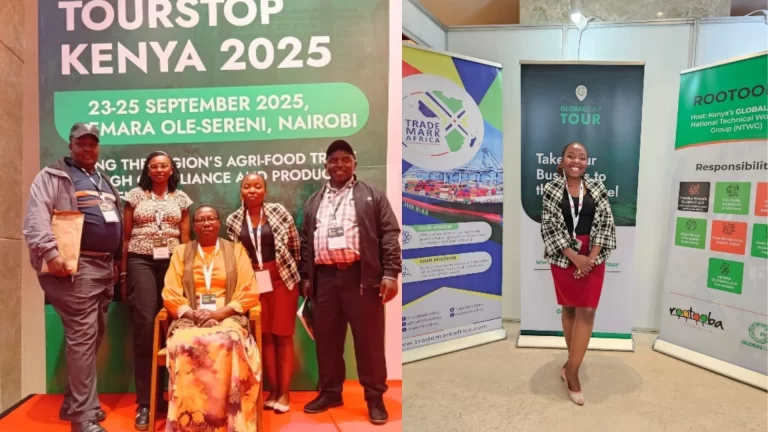

By Faith Kemunto and Dr. Eric Magale
Introduction
Cooking is an essential part of everyday life; therefore, driving efforts towards clean cooking is a critical consideration for governments, non-profits, and the private sector. Approximately 2.5 billion people globally rely on farming and cattle for subsistence and income. Cattle is not only a source of food but it also plays a significant cultural role in African society as a store of value. In recent times, according to the IPCC report, there has been increasing attention on livestock as a source of methane, a short-lived Climate pollutant (SLCP) that is about 20 times more potent than CO2 which contributes to global warming. Cattle, however, are a source of manure, which has been touted as one of the ways to improve circularity and provide energy through the generation of portable biogas.
Portable biogas gives rural people the ability to power their kitchens with cheap and clean energy. Households can use manure to generate their own cooking gas using inexpensive and easy-to-use portable biogas systems instead of buying costly charcoal or fuel, both of which results in deforestation and expose people to harmful indoor smoke. For villages on the frontlines of climate change, biogas utilization opens new economic opportunities and has the potential to bring about social equity and resilience to climate change. Further, biogas helps in combating climate change by reducing greenhouse gas (GHG) emissions from open manure, deforestation and indoor air pollution from the use of firewood, charcoal and other traditional energy sources, the core objective of the Just Energy Transition.
Why portable Biogas
Biogas is significantly more beneficial to poor communities than energy sources such as firewood or charcoal, which are not only more costly but also adversely affect the climate. To generate sufficient biogas for a day, it is estimated that a family needs waste from approximately 3 cows or 6 pigs. Biogas generation is straightforward, as it comprises only collecting animal waste and transferring it to a long-lasting biogas digester which could be made of plastic or bricks and mortar. Methane gas is naturally released when the manure ferments inside the biogas digester, and methane is repurposed as clean gas for cooking or heating water. This gas is then supplied straight into the kitchen.
Moreover, biogas empowers women. In African society, particularly in rural settings, the woman typically takes on the role of preparing food for the family; this involves collecting firewood or sourcing charcoal which can be back-breaking work and time consuming. Biogas reduces this workload for women, freeing up their time and energy which can be channeled to other income generating activities, thereby empowering them economically; this is particularly relevant for women-led households. For instance, women will have the capability to contribute to biogas value chain and sell the biogas by-products such as slurry. Through this, a more sustainable and equitable society will be created.
There are several challenges that stakeholders need to confront to actualize the widespread use of portable biogas. For instance, the marginalized and vulnerable families may find it challenging to affordably purchase and feed animals, particularly those living in dry or semi-arid areas or those with low and erratic incomes. The second challenge relates to the system of livestock production in Kenya; 80% of livestock farming in Kenya is practiced through pastoral systems. In pastoral systems it is difficult to harness cattle refuse for Biogas production, nonetheless, it is possible with the remaining 20% practiced by smallholder farmers in intensive farming systems to produce portable biogas. People in such areas are the biggest consumers of costly charcoal and the ones who force women and children to go great distances in search of firewood.
Various recommendations are instrumental in addressing these challenges. The government of Kenya needs to have a significant impact in ensuring that biogas is accessible to the vulnerable and marginalized groups. Kenya’s Ministry of Energy and Petroleum needs to support in establishing livestock assistance programs that provide animals to families without basic livestock, such as cows or pigs at a subsidized price. In much the same way as solar companies implement the pay-as-you-use model, government agencies could pilot similar models for communities to acquire livestock with the end goal of creating more capacity for biogas production.
Establishment of community biogas hubs. Sharing within communities is another workable option. Local farmer organizations and cooperatives could work with government agencies to establish community biogas hubs. Through the hubs, residents combine their animal waste with that of nearby homes and feed it into a communal digester, which can be beneficial to larger communities, including community members without cattle, by leveraging economies of scale.
Biogas has solidified into a reality, and many people in rural Kenya are already benefiting from it. Organic materials account for more than 60% of Kisumu’s solid waste. Included in this category are items discarded from homes in informal settlements and other residential areas. Just a fraction of this waste is collected and sent to a landfill at Kasese, which is around forty kilometers distant from the Kisumu CBD. Byproducts from the process of generating biogas have an additional benefit to farmers in that they can be used as agricultural manure, which can reduce the cost of purchasing inorganic fertilizer and boost yields. If the fraction of the solid waste turned into biogas and manure is increased, climate resilience in the county of Kisumu can be fostered.
Kiambu farmers have embraced installation of biogas production technologies. There is a balloon biogas plant in Kiambu County. As illustrated in figure 1, the balloon biogas system combines a digester and a gas-holder plant in the comfort of one’s own residence. During the first phase, animal waste is combined with water in a proportion of 2:4 in the balloon bag. In the subsequent step, the fermentation process takes place, during which the substrates are introduced into chambers (balloons) that combine the digester and the gas holding. After that, the gas is stored in the top portion of the balloon, which is where the inlet and outlet are joined directly to the skin of the balloon. The skin of the balloon then inflates once the pressure of the gas is higher. The last step is the generation of biogas, which occurs when fermentation takes place within the balloon. This results in the production of biogas. Methane, carbon dioxide, and water are all components of the gas, and once the fermentation process is complete, the waste products are discharged via the outlet. These waste products are then used to produce agricultural manure.
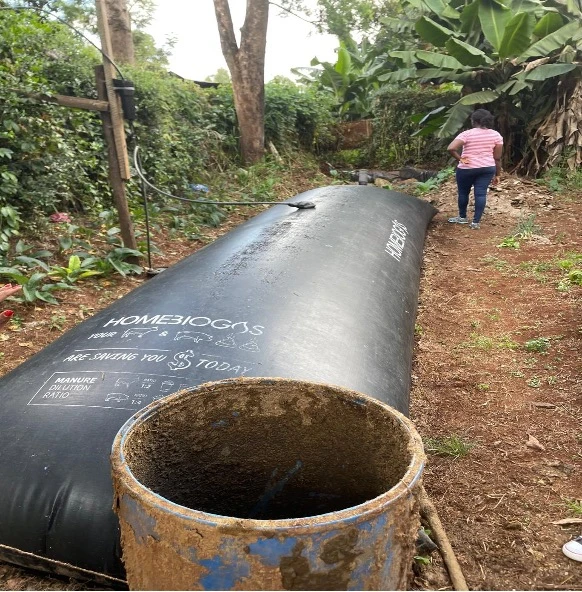
Figure 1: Balloon biogas system in Githunguri, Kiambu County
Biogas is growing to be an integral element of rural life in different parts of the world. For example, in India, millions of rural homes convert cow manure into usable cooking gas using small-scale biogas devices. Keeping these basic digesters running is easier for farmers because of government incentives and training. Likewise, Rwanda is another country that has seen the widespread use of biogas in institutions such as boarding schools, jails, and rural households. Schools may save money on firewood and help preserve local forests by cooking hundreds of meals every day using biogas made from cow manure.
Conclusion
Rural communities in Kenya can benefit significantly from the many benefits of biogas use if efforts towards mainstreaming it will be emphasized. Even households without animals may benefit from community and county government initiatives. Portable biogas is clean, economical, and sustainable. It provides households with rich fertilizer to enhance their crops, lowers home fuel expenses, improves interior air quality, and lessens the demand for firewood. To this end, it is paramount to note that our villages feed this country, and they can power it too. With just a few cows or pigs and a simple biogas digester, rural everyday waste is converted into a clean, steady energy source.