
By Ursulla Wandili, Monroe Ouma, Maureen Kabasa
Introduction
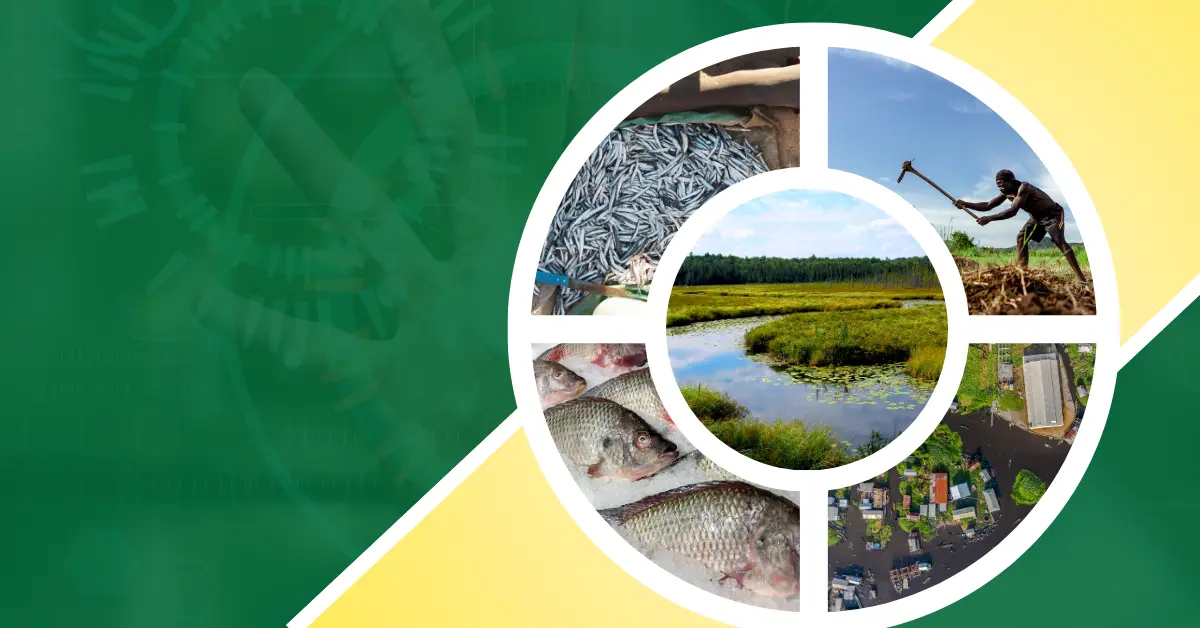
The Yala Wetland, one of Kenya’s most ecologically vital and culturally rich landscapes, is undergoing a transformation that is both quiet and significant. Once vibrant with papyrus reeds, fish populations, and community activity, the wetland has been increasingly threatened by unsustainable land use, deforestation, and large-scale agricultural developments that have disrupted its ecological and social balance (Dedan, 2023)
These pressures have had a profound impact on the local population. Fishers have experienced a steep decline in stocks, smallholder farmers are struggling with irregular water flows, and women who depend on papyrus weaving have seen their raw materials diminish (Thenya, 2006). Longstanding cultural ties to places such as Risamba and Thithia are also weakening under the strain of environmental change.
In response to these challenges, the TRANSPATH project, a collaborative initiative spearheaded by Egerton University, the African Centre for Technology Studies (ACTS), and Kaimosi Friends University, in partnership with local and global stakeholders, has been focused on co-developing inclusive, science-driven tools for sustainable governance of wetlands in the Lake Victoria Basin. A significant aspect of this project is the Yala Wetland Transformation Laboratory (T-Lab). This participatory space brings together communities, researchers, policymakers, and civil society to co-create restoration strategies and build shared ownership of the wetland’s future.
This blog draws on reflections and insights from the second Yala T-Lab held in May 2025, as documented in the official workshop report II. It highlights how dialogue, learning, and collective action are helping to reframe the future of the Yala Wetland, from a landscape in crisis to one rooted in collaboration and possibility.
A Moment of Reflection and Realignment
The second Yala wetland T-Lab, held in May 2025, provided an important opportunity for stakeholders to reflect, recalibrate, and recommit. Instead of merely recounting past efforts, participants re-engaged with the foundational Seeds of Change identified in the first T-Lab: Legal Advocacy and Policy Dialogue, Wetland Education and Outreach Programmes, Community-Led Restoration, Inter-agency Coordination, and Papyrus-Based Enterprises. The aim was to refine and realign these themes to better reflect evolving local realities and shared aspirations for the sustainable management of the Yala Wetland.
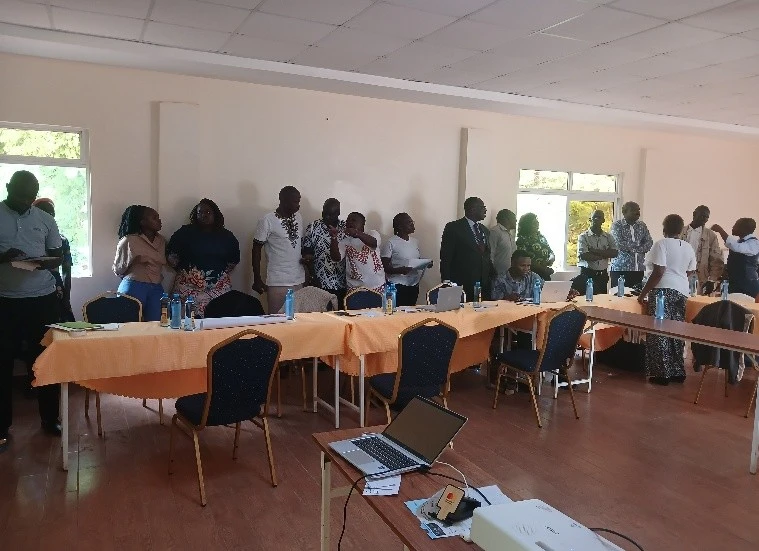
Among the key outcomes was a reaffirmation of community-led restoration, emphasizing local stewardship of degraded zones. Papyrus-based enterprises were redefined to reflect a more collaborative and research-informed approach to sustainable livelihoods. Inter-agency coordination was reimagined with a focus on transparency and practicality, while education and outreach were elevated as essential drivers of transformation. Legal advocacy and policy dialogue also received renewed attention, with participants calling for more effective enforcement and increased public awareness.
As one participant noted, “The T-Lab gave us a chance to look at our roles differently, not as isolated actors, but as contributors to a shared journey.”
Deepening Understanding across the Landscape
The discussions at the T-Lab revealed the importance of making knowledge accessible, actionable, and inclusive. Participants stressed that many community members remain unaware of key environmental laws, wetland dynamics, or their roles in conservation.
To bridge this gap, stakeholders underscored the value of culturally relevant education. Community radio programs, school mentorships, storytelling, and local dialogues were cited as vital tools for reaching different groups, especially youth and marginalized populations. These approaches help translate policy into practice and foster local ownership.
“You cannot enforce what people do not understand. Education is where accountability begins,” observed a local teacher from Siaya.
The dialogue also highlighted a disconnect between policy frameworks and community awareness. Even where strong legal instruments exist, implementation is often slow due to lack of communication or coordination. Addressing this requires trust-building and more regular joint planning.
Recognizing Economic Realities
The relationship between environmental restoration and sustainable livelihoods was another recurring theme. The pressures facing the wetland are closely tied to the everyday economic needs of communities. Participants emphasized that conservation efforts must go hand in hand with income-generating alternatives.
Structured and environmentally sound enterprises, such as papyrus product development, beekeeping, and ecotourism, were seen as essential to long-term success. These must be developed with research support, technical training, and collaborative planning.
One participant from Busia summed it up: “Restoration without livelihoods will not last. People must see value in protecting the wetland.”
Translating Insight into Action
Building on these insights, the T-Lab transitioned into concrete planning. Stakeholder groups outlined commitments and timelines across immediate, medium, and long-term horizons. Women’s associations from Siaya advocated for improved water access, formalized community-based enterprises, and skills training. Men called for increased community education, valuation of ecosystem services, and infrastructure repair. Busia representatives pushed for localized training, ecological land-use planning, and stronger radio programming to spread awareness.
Additionally, Government agencies and civil society actors presented strategies for operationalizing land use plans, supporting conservation-based businesses, and establishing wetland resource centers. The private sector emphasized conservation-linked investments and long-term financial models like payment for ecosystem services.
The resulting roadmap included short-term activities like public education and fishing regulation, medium-term actions such as enterprise support and data-sharing mechanisms, and long-term strategies aimed at institutional resilience and intergenerational learning.
Personal Responsibility and Shared Ownership
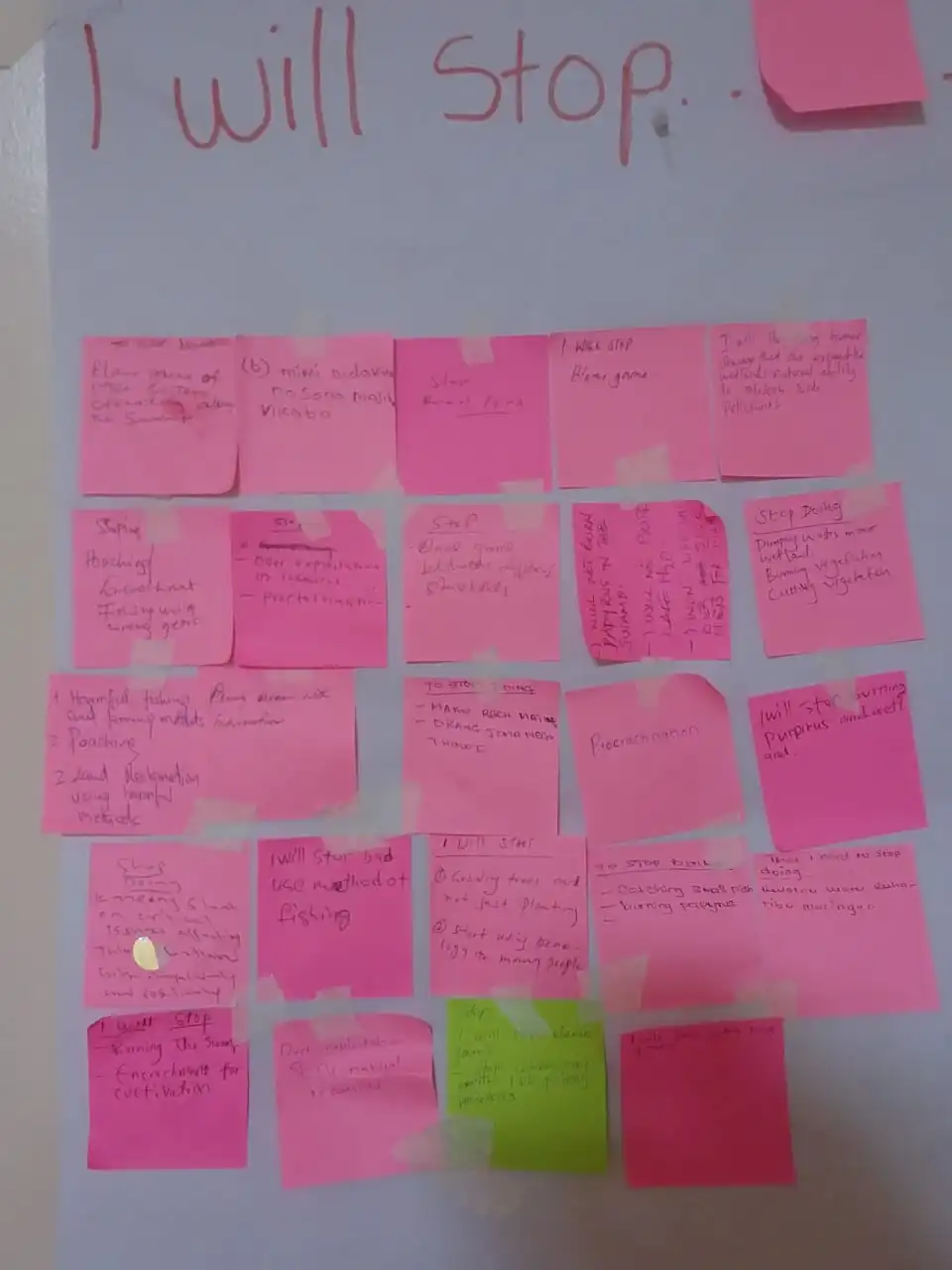
The most powerful segment of the workshop came during the closing reflection. Participants responded to prompts on personal commitments: “What will I stop doing?” “What will I start doing?” “What will I continue doing?”
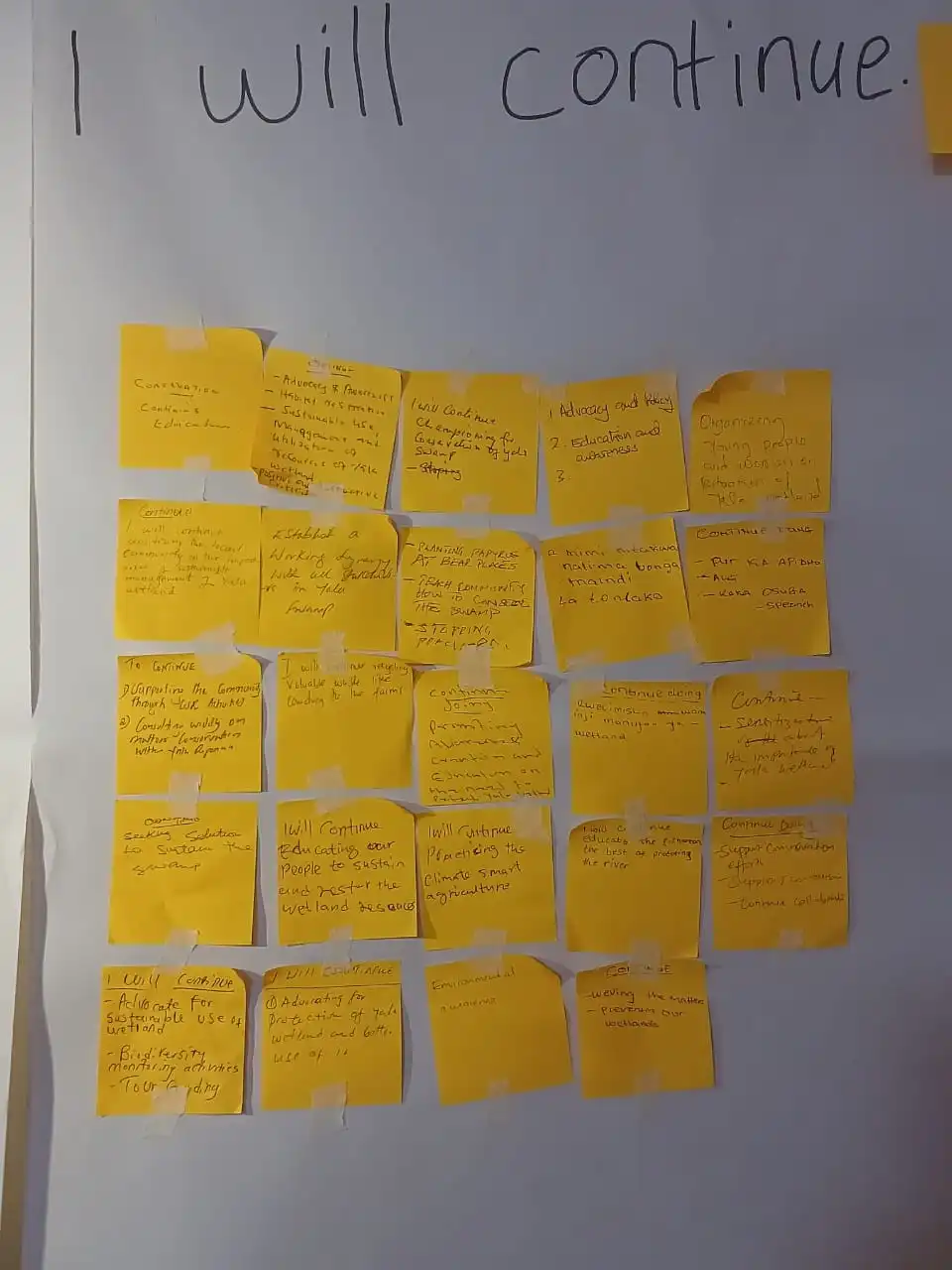
These reflections were deeply personal yet broadly unifying. Some pledged to stop harmful practices like illegal fishing, others committed to starting mentorship programs, or documenting Indigenous knowledge. Many resolved to continue their outreach and environmental education work.
“We are restoring not just trees, but trust,” one woman from Siaya remarked.
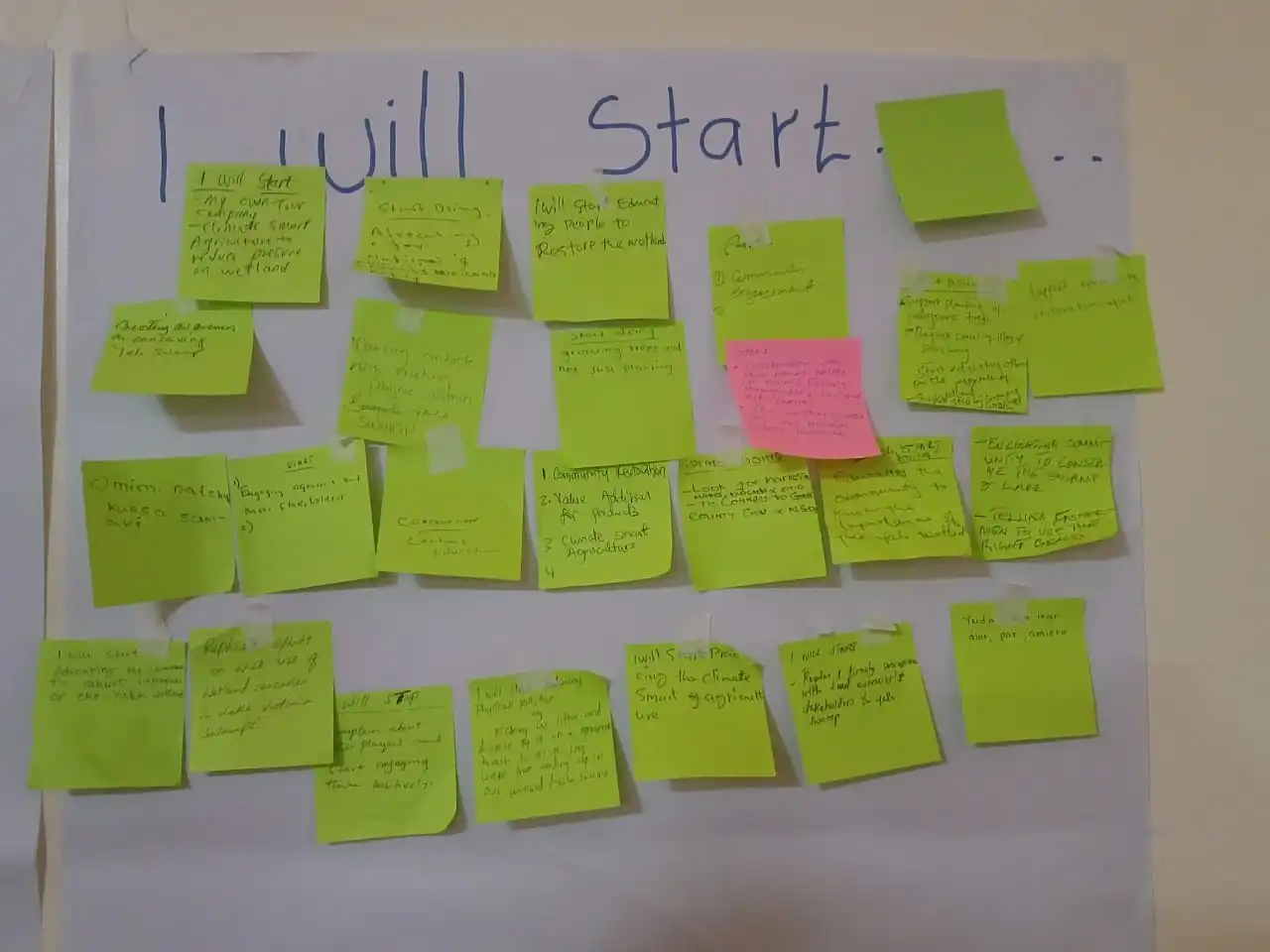
These individual pledges reinforced the workshop’s central message: lasting transformation begins with personal resolve and collective accountability.
Sustaining the Momentum
The Yala Wetland remains a place of ecological complexity and cultural significance. Its future, while still uncertain, is now being shaped through inclusive dialogue, evidence-based planning, and mutual commitment. The lessons from the T-Lab are clear. Restoration requires coordination, education, and sustained collaboration. No single actor can achieve this alone.
“Everything else may be in place, but without law and order, it will all collapse,” an elder from Yimbo cautioned.
The reframed seeds of change now serve as both a strategic guide and a symbol of renewed partnership. If nurtured, this momentum could transform Yala wetland from a contested landscape into a model of participatory wetland governance. Ultimately, Yala Wetland’s story is more than environmental recovery. It is about reimagining relationships between people and ecosystems, knowledge and action, rights and responsibilities. If the spirit of the T-Lab is sustained, then Yala wetland may yet become not only a restored wetland, but a future reclaimed.
References
- Dedan, O. O. (2023). The Economic Benefits of Yala Wetland Resources in the Lake Victoria Basin: Threats. African Journal of Education, Science and Technology, 7(3), 65-75.
- Thenya, T. (2006). Analysis of Macrophyte Biomass Productivity, Utilization, and its Impact on Various Eco-Types of Yala Swamp, Lake Victoria Basin, Kenya. 33–36.