

By Monroe Ouma, Ruth Wambui & Winnie Wangwe
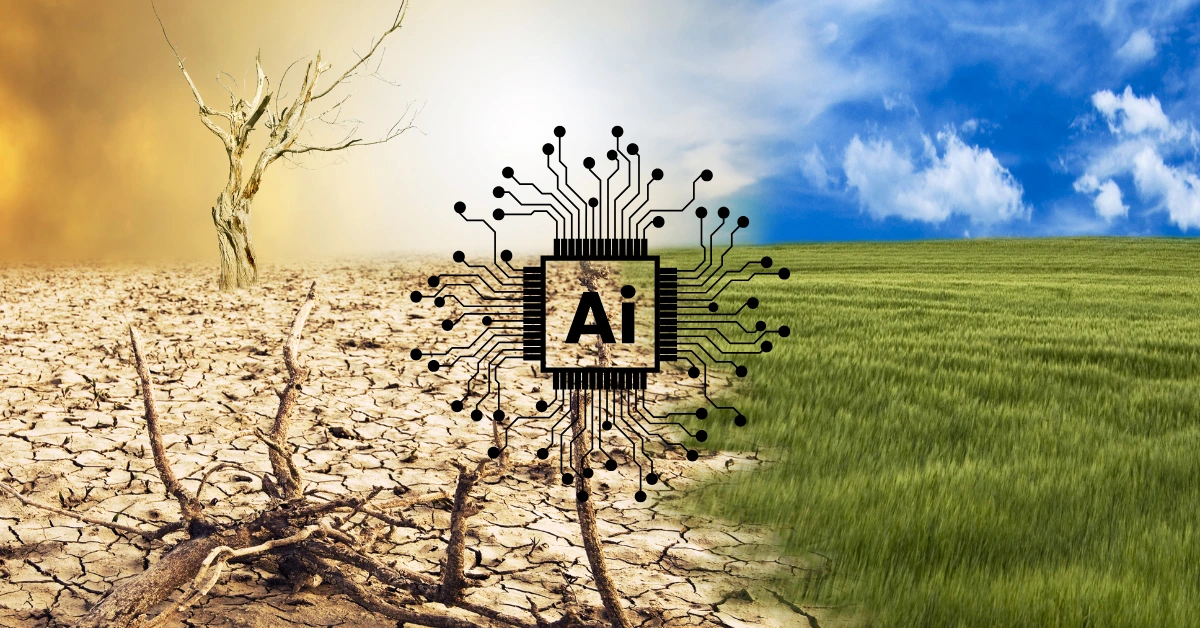
Using AI to tackle climate change, the ethical risks are usually smaller and less serious than in areas like healthcare or criminal justice, where it relies heavily on personal data and makes direct decisions that affect people’s lives (Tsamados et al. 2020)
Introduction
Kenya, like many other countries, contributes to the global greenhouse gas emissions, and the risks it faces from climate change are significant. The main contributors are the Energy and Agriculture, Forestry, and Other Land Use (AFOLU) sectors, where deforestation, fossil fuel use, and agricultural expansion continue to drive growth in emissions. On average, emissions have grown by 4% per year since 1990.
To be climate sensitive, Kenya’s Nationally Determined Contribution (NDC) commits to reducing emissions by 32% by 2030. To achieve this, the country has put in place policies in agriculture, energy, transport, forestry, waste, and industry. These include the Climate Smart Agriculture Strategy, Least Cost Power Development Plan, Sustainable Waste Management Act, and the 10% tree cover target. With this foundation in place, this blog tries to explain how Kenya should consider Artificial Intelligence (AI) in climate resilience efforts as part of the solution.
AI Against Climate Change
Artificial intelligence can be defined as a collection of computational tools and strategies designed to simulate or improve tasks typically perceived as requiring human intelligence (McCarthy et al. 2006). Through advanced data processing, AI can forecast temperature changes, anticipate events such as El Niño, model rainfall, and predict extreme weather patterns like floods and wildfires. These applications improve the accuracy of climate models and provide clearer insights into both present conditions and future risks.
In addition to deepening scientific understanding, AI has been increasingly applied to practical solutions that reduce emissions and support adaptation efforts. It is used to improve energy efficiency in industries and buildings, optimize shipping and grid systems, monitor pollution, and evaluate the carbon footprint of materials. AI also supports policy by simulating the potential impacts of measures such as carbon taxes and sustainable transport systems. AI works by converting data into actionable insights that inform both immediate responses and long-term strategies.
So What? The Need for Responsible and Inclusive AI
AI systems learn from past data that has already been labeled and organized, and they use this information to make predictions or decisions about new situations. The challenge is that if the original data contains bias, the AI can unintentionally carry it forward, leading to unfair treatment or discrimination against certain people or groups. For example, if AI relies on smartphone data to understand how people travel, it may overlook communities where fewer people own smartphones. This could lead to biased results that don’t accurately reflect everyone’s transportation choices (Dabiri and Heaslip 2018).
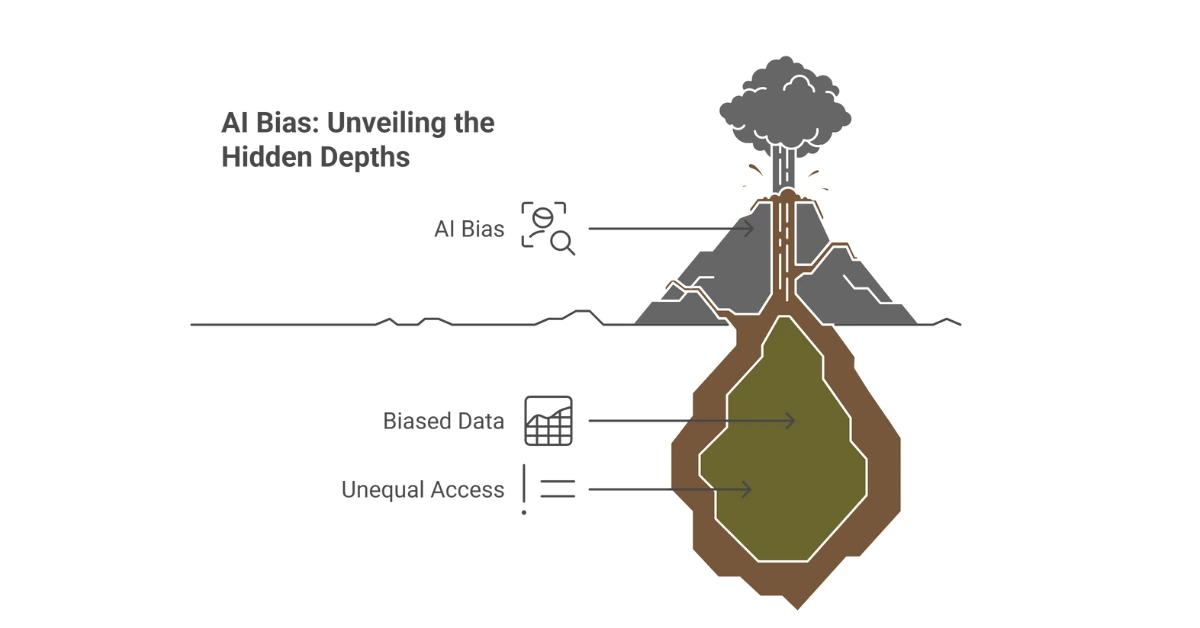
AI systems draw on both personal and non-personal data, and efforts to reduce emissions often depend on information that reflects patterns of human behavior raising important privacy concerns. For instance, control systems aimed at lowering carbon footprints, such as those used in energy storage, industrial heating and cooling, and precision agriculture, the effectiveness of AI systems often relies on highly detailed, real-time data. The data gathered can include sensitive personal details, creating risks to privacy not only for individuals but also for entire communities (Floridi 2017). The implication is clear: AI will only serve the climate agenda effectively if inclusivity, fairness, and data protection are embedded in its design and deployment.
Conclusion
Artificial intelligence offers a powerful opportunity to accelerate progress on Kenya’s and the world’s climate goals. Its ability to process complex data and optimize decision-making makes it a critical enabler of both mitigation and adaptation. However, the success of AI in this sector depends not only on technological capacity but also on aligning its use with ethical principles and societal values. The main challenge is to ensure that as AI is scaled up in climate action, it reduces emissions and enhances resilience without compromising fairness, inclusivity, or privacy.
For further reading:
Cowls, J., Tsamados, A., Taddeo, M. et al. The AI gambit: leveraging artificial intelligence to combat climate change—opportunities, challenges, and recommendations. AI & Soc 38, 283–307 (2023). https://doi.org/10.1007/s00146-021-01294-x